
AI-Powered Document Management
OCR, classification and semantic search for unstructured documents - purpose-built for the mid-market
Why Standard DMS Solutions Fall Short
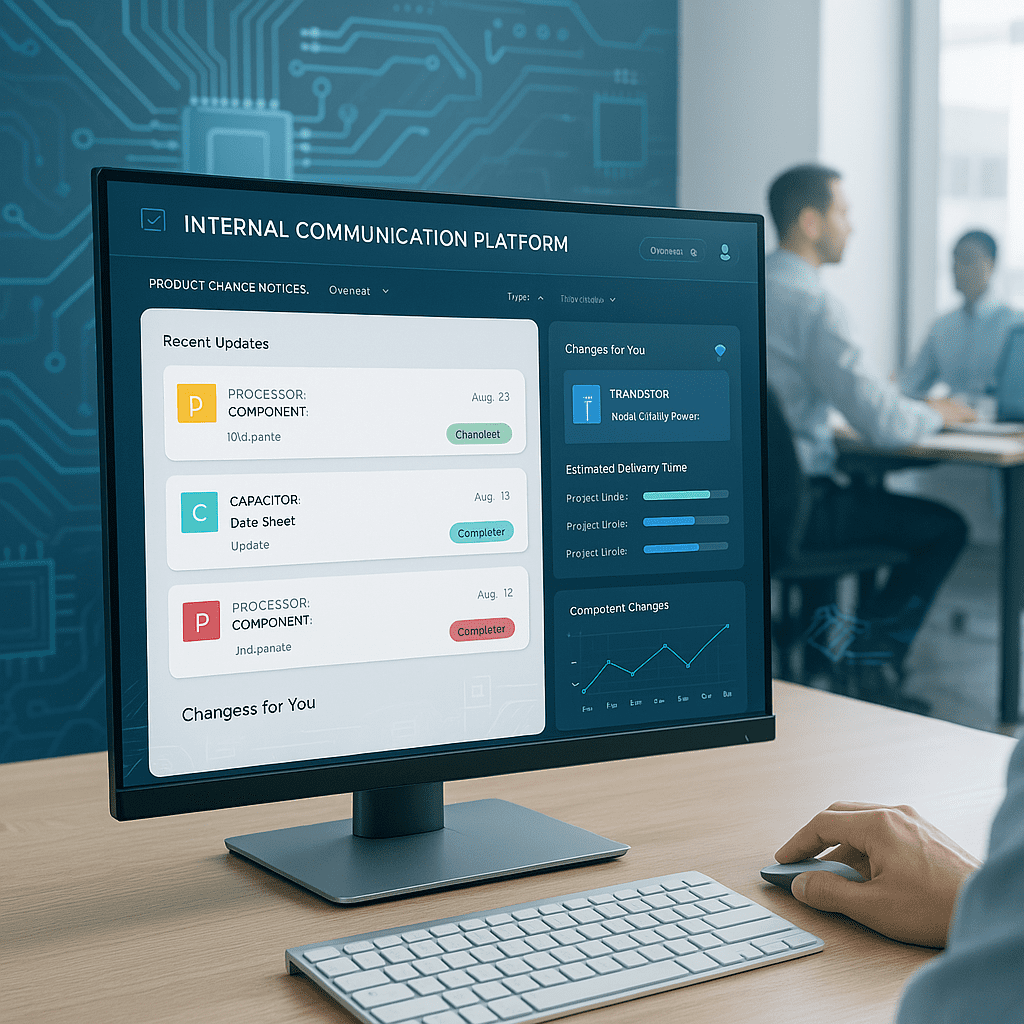
Classic document management systems like d.velop or DocuWare do not solve the actual problem: unstructured documents - invoices, contracts, claims, patient records - come in hundreds of different layouts and contain information that no rigid rule set can reliably extract. Elasticbrains develops AI-based document processing pipelines that combine layout analysis, OCR and large language models. The result: documents are automatically recognised, classified, relevant data is extracted in a structured way and made searchable through semantic search - without manual pre-sorting, without maintaining rule sets.
Use Cases in the Mid-Market
AI document processing solves concrete operational problems in industries with high document volumes:
Incoming Invoice Processing
Automatic recognition of supplier, amount, line items and tax codes from any invoice layout - including forwarding to ERP and accounting systems
Contract Analysis & Management
AI automatically extracts terms, notice periods, contracting parties and critical clauses, making the entire contract portfolio semantically searchable
Medical Records & Patient Documentation
Structuring unstructured medical documents, diagnosis extraction and GDPR-compliant processing of personal health data
Claims & Insurance Documents
Automatic classification of claim types, extraction of relevant parameters and pre-population of processing masks in claims software
Core Functions of Our Document AI
The technical architecture combines specialised AI models for each processing step:
Layout-Analyse & OCR
Erkennung beliebiger Dokumentlayouts mit LayoutLM und Donut – auch bei schlechter Scanqualität, Handschrift und mehrspaltigen Dokumenten.
Automatische Klassifikation
LLM-gestützte Erkennung von Dokumenttyp, Inhaltskategorie und Routing-Ziel ohne manuelle Regelwartung.
Semantische Suche (RAG)
Alle verarbeiteten Dokumente werden in eine Vektor-Datenbank überführt. Mitarbeiter finden Inhalte über natürlichsprachliche Anfragen statt starrer Schlagwortsuche.
DSGVO-konforme Verarbeitung
On-Premises-Hosting, anonymisierte LLM-Calls und lückenlose Audit-Logs – mehr dazu auf unserer DSGVO & KI Seite.
Workflow-Automatisierung
n8n-Workflows leiten extrahierte Daten automatisch in ERP-, Buchhaltungs- und Archivsysteme weiter – Teil unserer Automatisierungslösungen.
KI-Plattform-Integration
Dokumenten-KI als Modul in größere Custom KI-Plattformen integriert – mit RAG-Wissensbasis, Multi-Agent-Workflows und internem KI-Assistenten.
Further Use Cases
ESG Reporting & Sustainability Data
Automatic extraction of ESG metrics from supplier reports, emission certificates and internal audit documents for regulatory reporting
Public Sector & Authorities
Digitalisation and classification of application documents, automatic pre-population of administrative workflows and compliant archiving
Procurement & Supply Chain
Processing of delivery notes, customs documents and certificates with automatic reconciliation against purchase order data in ERP systems
Technology Stack
We rely on specialised AI models and open-source components proven in production environments:
Our Implementation Process
- Document Audit: We analyse your actual document volume: types, quantities, layouts, quality levels and existing systems. The architecture decision is based on this.
- Pilot Pipeline: We develop an initial processing pipeline for the most important document type - e.g. invoices or contracts - and validate extraction accuracy on real documents.
- Fine-Tuning & Classification: Layout parsers and classification models are adapted to your specific document types. Target: >95% recognition accuracy without manual rework.
- RAG Integration: Processed documents are transferred to a vector database. Staff can immediately ask questions via semantic search or an internal AI assistant.
- System Integration: Connection to existing ERP, DMS or accounting systems via APIs or n8n workflows. No media breaks, no duplicate data maintenance.
- GDPR Hardening: Data protection review, anonymisation before LLM processing if required, clarification of hosting requirements (on-premises, EU cloud) and access control setup.
- Rollout & Monitoring: Production launch with continuous monitoring of extraction quality. Errors are automatically routed to a review queue and fed back as training data.
Frequently Asked Questions
How does this differ from a classic DMS like d.velop or DocuWare?
Fundamentally. Classic DMS solutions are primarily filing systems: they organise, version and archive documents using rules. Our AI document pipelines understand the content - they recognise document types without rule definitions, extract structured data from any layout and enable semantic search. Both approaches are not mutually exclusive: we frequently integrate our AI layer as an upstream pipeline into existing DMS infrastructure.
How well does recognition work with poor scan quality?
Our pipelines combine multiple OCR engines (Tesseract, Azure OCR) and apply upstream image correction (deskewing, denoising, contrast enhancement). For handwritten content we use specialised handwriting OCR models. The actual recognition rate depends on your document base - which is why we always start with a document audit and a validated pilot.
Can our documents be processed in a GDPR-compliant way if they contain personal data?
Yes. We implement multiple GDPR safeguards: on-premises hosting on your own infrastructure (no cloud requirement), anonymised LLM processing (personal fields are replaced by pseudonyms before the API call), strict access control per document type and complete processing logs for audit requirements. Learn more on our GDPR & AI page.
What does implementation cost and from what volume does it make sense?
Projects typically start with a pilot phase for one document type. As a rough guide: if you manually process more than 500 similar documents per month, the investment usually pays off within 6-12 months. We provide a concrete cost-benefit analysis based on your document audit.
Can we train our own models or are we dependent on commercial LLMs?
Both are possible and decided project-specifically. For layout analysis and classification we use open-source models (LayoutLM, Donut) that we fine-tune on your data. For complex semantic tasks we use commercial LLMs with an anonymisation layer, or alternatively locally hosted models such as Mistral or LLaMA. The choice depends on data sensitivity, accuracy requirements and operating costs.
Ready for Your Project?
Let us clarify in a non-binding initial conversation how we can best support you.
Free · No obligation · Personal initial consultation by experienced Munich experts